The Brief Creative Newsletter
August 8, 2026
063 - Why you keep losing faith in AI
or at least why Linkedin seems to
Stop typing what you can say in 10 seconds
In partnership with Wispr Flow
Wispr Flow turns your voice into clean, professional text inside any app. Emails, Slack, client updates — speak once, send without editing. 4x faster than typing
 It’s legit the only tool I use every. single. day.
The Spark
This is stuff I'm enjoying out in the world (it's probably not B2B).
I’ve been reading a book lately that I thought I’d hate. It’s called The Score. The idea is that pretty much anything can be gamified but how we want to play those games is up to us.
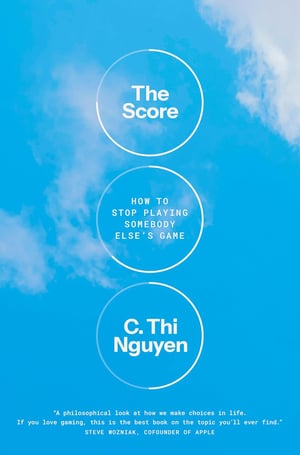 The Score by C. Thi Nguyen (not to be confused with The Score by The Fugees) is really good
What it usually comes down to is metrics and we can either adapt metrics to our values or we can take adapt our values to metrics. Most workplace environments ask us to do the latter through easily measurable things like leads or meetings booked or MRR. The things that are harder to measure tend to be harder to justify which usually doesn’t make them a priority. Since you’re reading a newsletter about brand you know which metrics I prefer.
🎵 Listening to The Score by The Fugees as I type this (see what I did there?).
The Deep Thoughts
This is what I'm thinking about.
When the major LLMs really came on the scene back in 2024, I was a Perplexity guy.
I'd messed around with ChatGPT. I'd messed around with Claude. Neither one really did it for me. Nothing particularly wrong with them at the time but nothing that felt right either. So I filed both under "not for me" and moved on.
Then the whole US government vs Anthropic thing happened and Claude exploded overnight. Every Linkedin post was about Claude. Every email was about a new connector. All anyone would talk about was how they were abandoning OpenAI and Google and whoever else to switch to Claude.
We’ve seen this type of excitement before but this one felt different because it wasn’t just noise, it was that people I trust (and whose judgment I actually respect) kept bringing it up, unprompted, with real enthusiasm. That's a hard thing to ignore when your whole business is supposed to be about staying ahead of the curve. I don't love following the crowd. Never have. But sometimes you need to see what’s going on. So I gave it another shot, mostly so I could say it sucks in a data backed way.
Years after my first trial, I ended up loving it. The connectors, the projects, the skills, how integrated the whole thing felt. I went from "not for me" to using it all the time, pretty quickly.
And then, right on schedule, I started noticing the hallucinations, the questionable outputs, the niceness… I’d start to lose faith in the outputs. I'd pull back a little. Then out of nowhere a new model or feature would drop, LinkedIn would explode, and I'd be right back in it. Turns out this is how it always works. Welcome to the AI hype cycle!
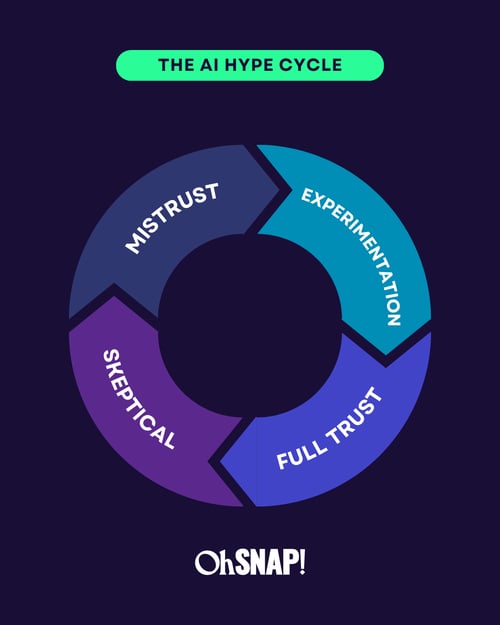 New model, new tool, new use case, same loop.
What is the AI hype cycle?
If we’re being honest, it’s something I made up. It’s also something I’ve seen happen over and over and over now. Is it exclusive to AI? No. This actually happens with most tools over time but if I didn’t throw AI in the headline you wouldn’t read this bad boy.
What are the stages of the cycle?
There are four stages in the hype cycle:
Mistrust
This is the “nope... no thank you.” phase where the assumption is that the tool won’t work and will probably make the work worse.
Typically someone you know said something or you read something. You know you should probably try it out but you’re just not sure. Whether it be because you’ve been burned in the past or something just feels off, you don’t trust it and you don’t want to.
Experimentation
This is where the noise usually starts to win you over. Curiosity (or usually FOMO) creeps in so you give it a shot on something low stakes. It works, you get a few wins, you start feeling good about the tech, so you use it more. Slowly that mistrust starts to melt away and you keep experimenting.
This phase is important because it’s where you allow yourself to be proven wrong. It’s especially powerful when you start using the AI to do things that maybe you’re not that good at.
Full Trust
You’re officially obsessed. You’re using the AI for everything. It’s "never wrong" and you start throwing every problem or question you have (even the simple ones) at it. You’re basically bros now.
Full trust is fun because you can let your guard down but where it can be dangerous is that you can get so confident that you start blindly trusting everything or using it for things you’re actually good at already...
Skeptical
Your bro starts to drop the ball. You start to see some gaps. You’re paying more attention to the hallucinations. You’re pushing back on outputs. You still use the AI but trust is breaking.
This is usually the point where you question AIs ability and what to use it for. If you mistrusted it at the start, you feel like it justifies that former view. If you fully trusted from the jump, then you’re likely to try and justify the mistakes. Neither is a good look.
In any case, just when you officially hit that breaking point, you’re back at the mistrust phase and it starts all over again with a new model, tool, or business case.
How do you hop on?
What's interesting isn't the loop itself. It's where people enter it.
In the Claude story from earlier my entry point was mistrust. I had a specific, personal reason to doubt the tool (I'd tried it and it underperformed) so I avoided it until there was enough FOMO to push me out of that mistrust.
But here’s another story. About six months ago, a friend of mine asked if I’d checked out Wispr Flow yet. It was another app I’d heard of but hadn’t gotten around to yet. He was obsessed and that was enough to not only get me to sign up for a trial but, because of the source, also come in fully bought in that it was going to be the best app ever (which it really is).
And plenty of people enter the hype cycle with full trust. Driven by excitement and momentum and ready to go.
Regardless of which path you take to get into it, eventually we all go through every step, sometimes multiple times.
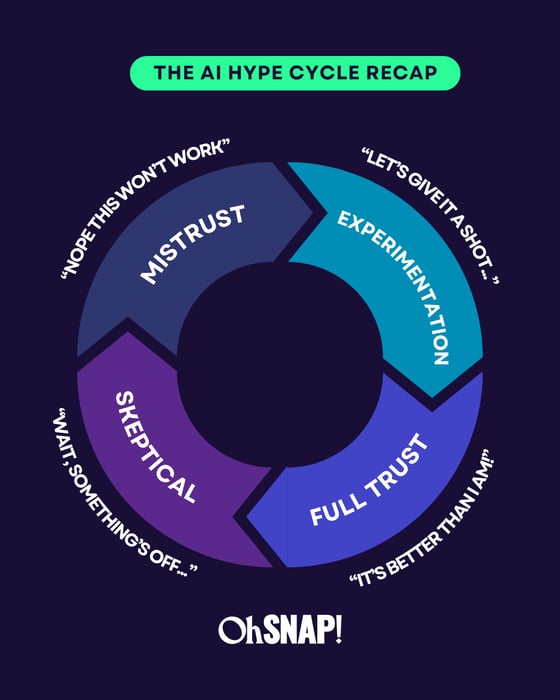 The AI hype cycle recap
For what it’s worth, if I have to be in the cycle, I want to be in early stages of skeptical. It just feels more optimistic. I trust the tool but not blindly and hopefully I’m asking the right questions. If you’re wondering why not somewhere in experimentation well it’s because I’m just a bit cynical by nature!
Why do we fall into the cycle?
Most people never take the time to figure out what they're actually good at (and what they're not good at).
So when AI shows up and gives them muscles, there's no filter for if it’s right or wrong, if it genuinely helps, or if it’s even necessary. Which means the only filter left is "easier," and easier isn't the same thing as valuable. If you don't know your own strengths and weaknesses, you have no way to judge whether AI is filling a real gap or just doing something you were already capable of but slightly faster.
It’s this lack of objectivity that causes AI FOMO and blind trust in the results. The whole AI first thing (which somehow we’re still talking about) isn't even how most automated companies operate even if they think they do. Zapier looked at 375 mid-market and enterprise companies and found that AI accounted for just 18% of workflow steps. The other 82%? Conventional automation—rules, filters, plain data moving between apps. Even in companies that are genuinely far along, AI isn't the answer to most of the problem. Yet we run at it almost every time which is a symptom of the hype cycle.
What do we do about it?
After going through this hype cycle myself dozens of times and watching it play out way more there are two suggestions I’d make.
First, before you reach for AI, get honest about your strengths and weaknesses, both individually and as a team. I say keep the strengths human. Let AI take the parts that are genuinely additive.
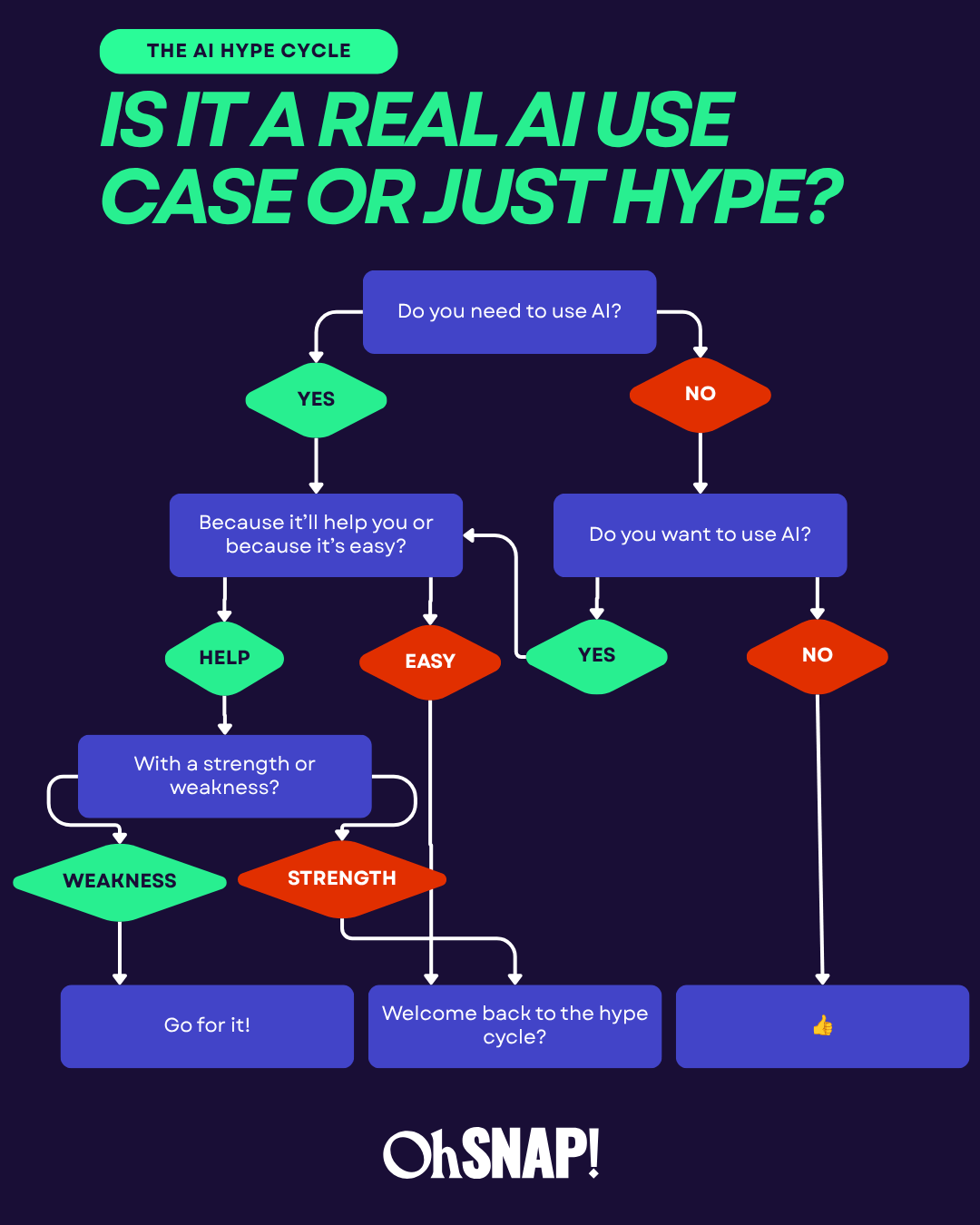 Here’s a little flowchart I put together
And every single time it feels like the obvious move, run it through that filter again (or feel free to use the flowchart) because the moment you stop asking, you're not assessing your problems properly anymore. You're outsourcing your thinking, which means you’re just back in the cycle, fully trusting what’s to come, waiting to get your heart broken again until the next model comes out.