The Brief Creative Newsletter
December 6, 2025
054 - What's good with that rollout strategy?
The 3 things you can't forget to do for a successful brand rollout
The Spark
This is stuff I'm enjoying out in the world (it's probably not B2B).
Yeah, I’m watching TV (Stranger Things, amirite?). I’m listening to music (Bad Bunny #1 on Spotify Wrapped). I’m traveling. Thanksgiving was great. Holidays are coming up. You know what I’m excited about right now? THE BRAND HATS ARE FINALLY IN PRODUCTION!!!
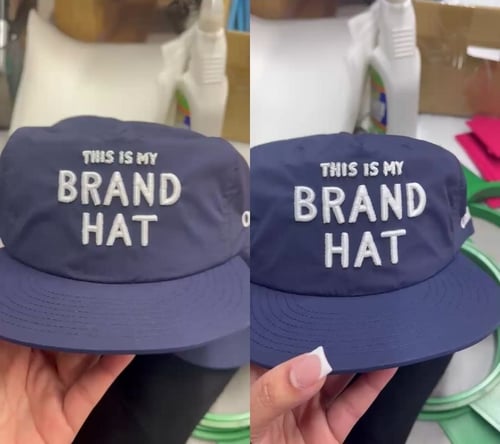 The last tweaks and choices before going to print (do hats print?)
I’ve been working on this hat for almost 8 months (which some might say is a waste of time) and I can’t believe it’s here. I made my choice but which version do you like better?
The Deep Thoughts
This is what I'm thinking about.
We’ve all done it. We built a product, designed a process, or purchased a new tool. It does everything you want it to do, has every bell and whistle your team asked for, and you’ve set it up perfectly.
It’s finally launch day. You’re ready for that W. You’re about to hit that Slack like a conquering hero. Then it’s crickets… nobody is using it and even worse, nobody cares. What happened? I bet you missed one of these three things.
 If you have a good product to roll out, these are the 3 things that will make it work
Every launch gets attention but that doesn’t mean it gets the right attention in the right places. You may have designed and built the world’s great product but that doesn’t mean people are ready for it and that in a nutshell is the issue—you spent too much time on the tool and not enough time on the people.
You gotta get the people going
Too many launches fail because the expectation is that whatever you’re launching is going to hit like Prometheus delivering fire from Mt. Olympus. Sorry, dude, I promise whatever you built isn’t that. Yes, the build is important (and in reality this whole newsletter assumes that whatever you built is worth launching in the first place), but the real work is getting the rest of the company to care.
An all-hand meeting won’t do it because those are too generalized and, let’s be honest, nobody is paying attention. Yes, it’s a big group setting and you can use it to tell the story of why this launch is important but the best thing you can do is hit the road with an internal road show. Identify the teams that will be impacted by the launch and show them why they should care. If you’re launching a new process, show them how it’ll make their work better. If you’re launching a tool like Canva, create specific templates for their team to show them exactly how they benefit.
Nobody cares unless it affects them directly, so it’s on you to do that. The more you do that, the more champions you create, and the best thing about champions is that they will start doing your marketing for you.
You gotta teach the people how to do it
I don't care how smart your team is, they won't "just figure it out." Unfortunately whatever you built is never as intuitive or easy to use as you think. As the builder, you’re naturally too close to it. Your audience isn’t. They’re gonna need help.
To successfully enable your team you’re going to need role-specific courses, onboarding for new hires, documentation that doesn't suck. Every hour you invest in enablement saves your team 10 hours of Slack questions later. We learned this the hard way.
I remember when we launched the first web modules at HubSpot, I thought it was the perfect system and everyone would catch on instantly. Nope! It took months to get people educated and onboarded because of that assumption. If I took the time to build the education, how tos, and record videos I should have, it’d have taken days, maybe weeks, but it would’ve been so much faster.
Don’t forget to keep your enablement materials consolidated in your Brand HQ.
You gotta ask for help
The worst thing about the Prometheus examples of a gift from the gods is that it assumes you know everything (as we know, Prometheus definitely didn’t see that ending coming…). With any type of launch—public or internal—you’re going to make mistakes and it’s important to learn from those so if you want people to buy in, you need to give them ownership.
That doesn’t mean they actually own the product or launch or tool but they do need to have a say in it’s future or they won’t use it. This is where feedback becomes critical.
Create a simple form (here’s an example). Be genuine in wanting to learn, set an SLA for reviewing feedback, and actually respond to submissions.. Show people what changed because of their input. When people feel ownership, usage goes through the roof. When they feel ignored, your tool collects dust.
Some of the biggest learnings of my career came from feedback forms, the biggest one being that most processes and tools are unintentionally designed for ourselves (meaning we think like designers when implementing Canva or developers when building a new CMS) but the thing is, our audience doesn’t have skills like us. If they did they wouldn’t need whatever it was we were building. Once I realized that I need to build for marketers or salespeople or whoever my actual audience was, everything changed. But I’d never have learned that if I didn’t ask for feedback. The tools would’ve never gotten better if I didn’t ask for feedback.
You gotta focus on the people
Excitement, enablement, and feedback. That’s what it comes down to. The teams that nail all three? Their adoption rates are insane. The ones that skip steps? They're still trying to figure out why people won’t use whatever it is they built three years later. So stop treating your launch like an event and start treating it like a process. Now be honest, which steps have you skipped?
The Pitch
This is what you should be thinking about.
This week we officially launched our Brand Systems Audit. It’s an opportunity for OhSnap! to come in and evaluate your creative operations and help you figure out what’s standing in your way of scaling—because you don’t know what you don’t know.
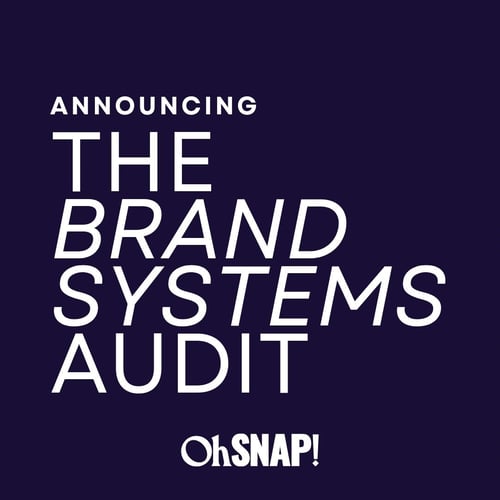 Announcing the OhSnap! Brand Systems Audit
If you still have Q4 budget you need to spend, this is a great way to make sure you start 2026 on the right foot.